
Let Them Eat the Rich
Bastille Day revolutionary ruminations.

A portion of the Boulder County farm I work at is flanked by ungodly large homes sitting on ungodly large lots. One of these homes is a 16,000 square foot monstrosity, and the other morning I heard the sound of a lawn mower mowing its seven acre grounds. This tended land, so far as I can tell, serves no functional value —no animals graze on it, there is no polo or football field, there is no camping ground for nature lovers or refugees. This lawn, like most lawns, is mowed for decorative purposes, at great expense presumably, for people who, statistically speaking, travel often and have more than one home.
A couple miles away from the monstrous home, scores of homeless tent encampments line Boulder Creek. Many of the poor folks who live in these encampments are addicted to drugs, especially Fentanyl, and last December, I attended a memorial service for the 55 homeless folks who died in Boulder in 2022. The exposure to the elements and lethal drugs is made worse by routine police sweeps that force these unfortunate folks to move while having their possessions tossed into a trash truck.

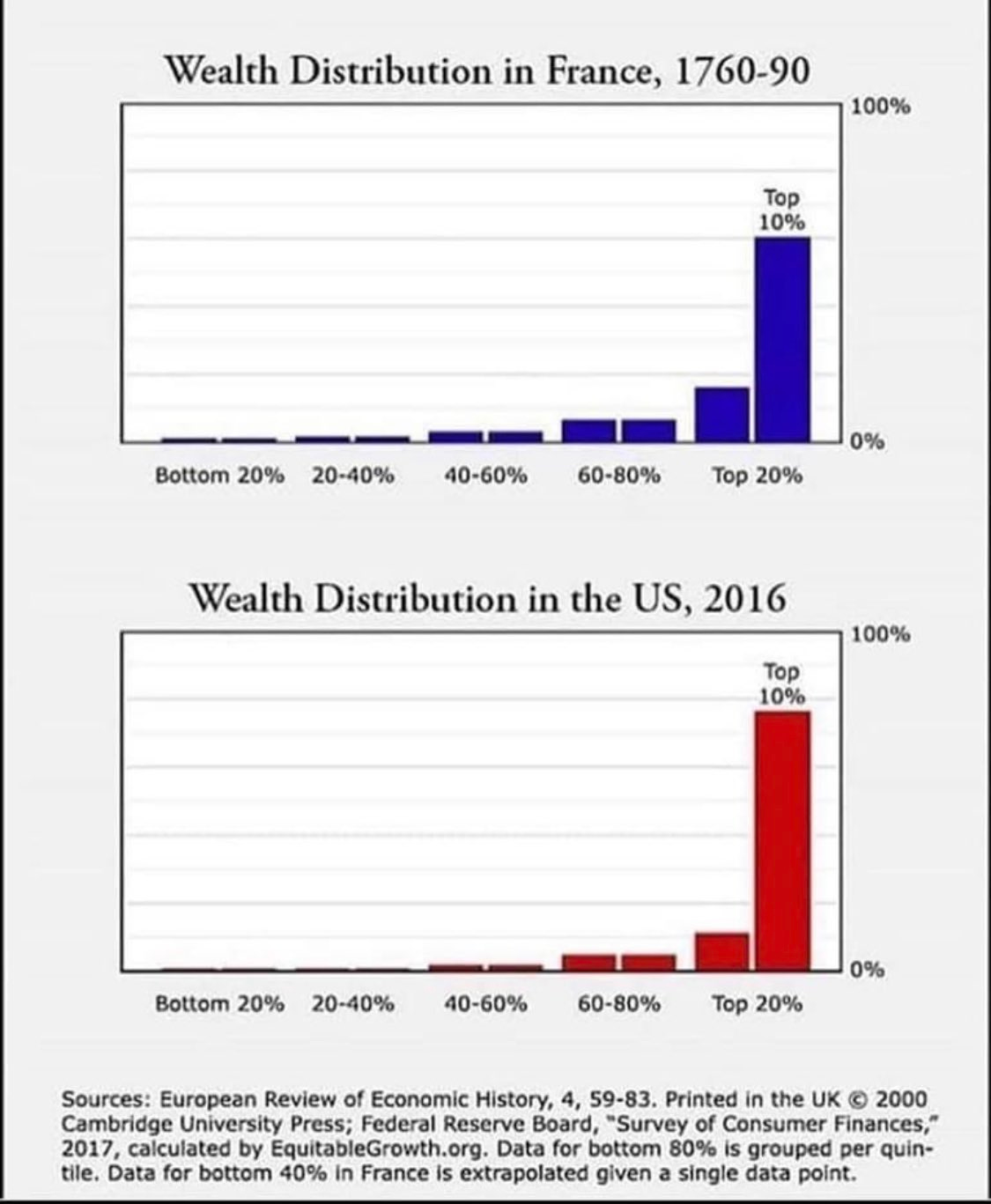
The above comparison between the haves and have-nots represents one miniscule example of the socioeconomic inequality that has flourished in America in the past several decades. A tiny portion of the U.S. population (and global, for that matter) has gamed the system in such a way as to consolidate the majority of wealth for themselves, while the masses labor for that wealth and generally struggle to survive. Historically speaking, when inequality crosses a certain threshold and the cost of disobedience becomes lower than the benefits of order, societal collapse ensues.

Speaking of collapse, today is Bastille Day, which commemorates the storming of the Bastille, the event that formally started the French Revolution. The Bastille was a Parisian armory and political prison that symbolized the oppressive power of king Louis XVI’s Bourbon dynastic monarchy. Eighteenth century, monarchic France was plagued by gross wealth inequality between the aristocracy and commoners, high inflation spurred by massive debt (state debt rose threefold during the reign of Louis XVI), engagement in wars they couldn’t afford (especially the American Revolution), high taxes, and a poor harvest. Basically, the same conditions of the United States today.
Yesterday, I wrote about H.G. Wells’ The Time Machine, and the future it portended of a devolved aristocracy being eaten by their devolved servants. The book was written over 100 years after the French Revolution began, but France’s revolt heralded the so-called Age of Revolutions that lasted another fifty-plus years. Perhaps as influential, The Time Machine was written during the anarchist movement, which culminated in the assassinations of King Umberto I of Italy, American president, William McKinley, and others. Amidst these social, political, and economic upheavals, it’s unlikely Wells viewed order and obedience between the poor multitudes and the rich few as constants.
Perhaps the biggest barrier for the ripening of a revolution today is a braindead, screen-addicted, lethargic populace. Unlike 18th century France or America, people are not speaking directly to each other and publishing their own pamphlets. Today’s would-be revolutionaries communicate on corporate-sponsored and government-censored social media platforms that are designed to distract and polarize their users, not enable them to coalesce and organize. If and when those platforms lose their appeal, if and when populations realize how profoundly they’re being exploited and led astray, a revolution, I’m confident, will be close at hand.
Dear reader: if you enjoyed this post, please give it a like, share it to anyone you think might enjoy it, and subscribe to the newsletter if you are not already. Thanks!
Karl Marx famously said, "Religion is the opiate of the masses" (although not clear if he actually said that); years ago I updated it to the TV. The wealth disparity statistics are stunning, as shown in your story, and equally surprising is how the have-nots are relatively OK with it and not organizing to make changes.