
No Steaks and No Stake in the Future
Attempts to build a world without killing and death is leading to a world without birth and life.

This week, the USDA approved the sale of UPSIDE, which is “cultivated chicken, grown directly from animal cells,” according to NPR. Bruce Friedrich, the president of the Good Food Institute, a non-profit tracking investment trends in alternative proteins, told NPR the approval put “consumers…one giant step closer to enjoying the meat they love without compromise” (emphasis mine). The compromise Friedrich is referring to is the killing of animals and environmental tolls of meat production. No-compromise, meat-like foodstuff companies have received $2.5 billion in investment funds in recent years. UPSIDE Foods alone has raised $598 million from investors like Bill Gates, Richard Branson, Tyson Foods, and the Abu Dhabi Growth Fund, according to Crunchbase.
I’ve opined about fake meat before —opinions based on my dissatisfying experience of eating industrialized, GMO-enhanced, monocrop-made, meat-like, food-like substances as well as my family connections to Beyond Meat. While I have not tried UPSIDE, I doubt it’ll change my opinion. I believe these products are primarily invented to reduce food costs and increase profits for an overpopulated world, not to resolve ethical or sustainability issues in meat production.
But I see the invention of meatless foods as representative of a greater delusion of a world without death and killing. This pure world, not incidentally, is also one without birth and living.
It’s worth establishing that meat consumption is not anomalous in human history. In fact, it’s what made us human, providing the high number of nutrient-rich calories needed for our big brains to evolve. And humans have basically consumed meat sustainably for much of history —that is, until industrialization and associated population growth made the scale of that consumption unsustainable. Meat production isn’t inherently unsustainable, and may be the key to a sustainable future (see video below), but it’s easy to argue that industrialized meat production for 8 billion people is.
Those pitching a meatless world seem ignorant or unwilling to acknowledge human evolution and history, especially when those things are connected with killing and death. Yet killing and death —often in the services of evolution, survival, and thriving —are fixtures of human history.
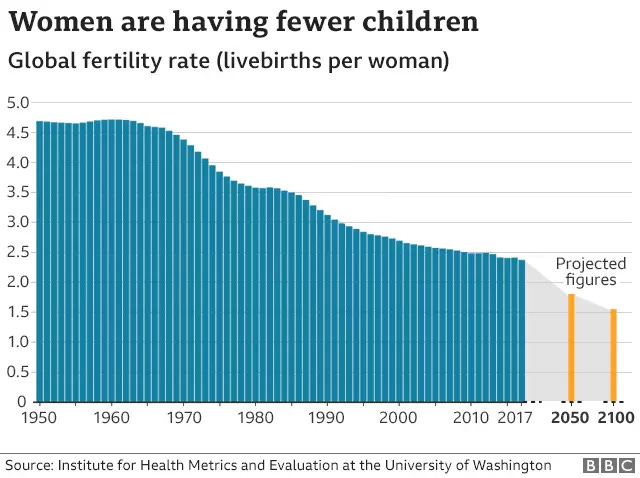
What’s not a fixture of human history —at least in times of plentiful resources like today —are the low fertility rates many “developed” countries like the U.S. are experiencing. These low fertility rates are accompanied by declining testosterone levels, which is possibly associated with reduced meat intake and replacement with soy products. The specific causes of low fertility and testosterone aside (there are likely many), I can’t help thinking the rising prevalence of non-heterosexual sexuality is an offshoot of these phenomena, as is the generalized reduced interest in having children.

I am a meat-eating reproducer. I don’t delight in killing animals for sustenance, but I do recognize its value in the context of personal and global human thriving. I do, however, delight in having children. Before having children, I had very little connection and stake in the future. I lived for myself and my lifetime. After having children, I became extremely connected to the future, living for my boys’ future welfare. In a tangible way, having children made me understand how all life —be it a cow, human, or universe —is born, reproduces, dies, and lives on through its offsprings. And while I am wholeheartedly in favor of population reduction, I don’t think it should be caused by the unintended consequence of shitty diets, poor health, and a diminished value of reproduction and the miracle of human life.
Dear reader: if you enjoyed this post, please give it a like, share it to anyone you think might enjoy it, and subscribe to the newsletter if you are not already. Thanks!
This is a very important topic, which also always provokes strong personal reactions, and it's very complex, so I'm happy to extend slack on any treatment. However, a correlation between soy food consumption and fertility rates is a startling reach - one could substitute in many other factors that would statistically align more closely. While the contribution of cattle production to climate change has a clear causative relationship.