
Life Is What Happens When You’re Not Looking at Your Phone
Incessant connected device use is a plague of the highest order.

Before my dad’s death in 2012, one of our primary bonding activities was hiking Boulder’s mountain trails. We would scale the local big peaks —Green, Bear, and South Boulder —while discussing life, nature, and the world. Though he wasn’t a religious man, my father held a deep reverence for nature, and our hikes amongst the trees and up the massive geological formations were deeply spiritual outings. I returned to Boulder in late 2020 and started running many of the same trails and peaks my dad and I hiked. The trails are still sacred to me —a place to commune with the earth, myself, and memories with my dad and our slow hikes and long conversations.

I was on one of these trails yesterday when I passed two sets of mothers and daughters hiking in close proximity. These pairs were not hiking “together” since, in both cases, the mothers and daughters were wearing headphones, seemingly on their own hikes and in their own worlds. This “alone together” scenario is terribly common on the trails and elsewhere, whether it’s happening with a mother and daughter, son and father, romantic partners, friends, or any combination thereof. This normalization of this diluted and distracted level of connection is so disheartening and fucked up.
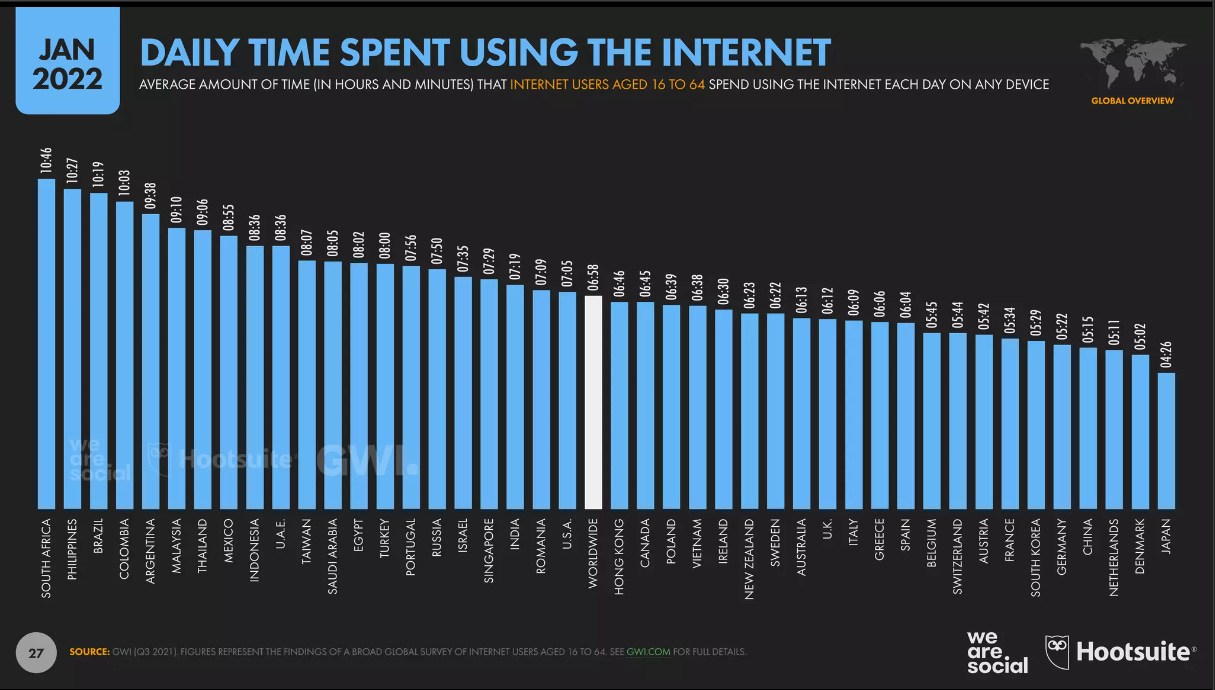
When web connected phones first became popular, people called Blackberry phones “crackberry”—alluding to the compulsive way people checked them. My guess is that early usage, which seemed pathological circa 2005, would seem tame by today’s standards. Estimates of average daily screen time for Americans vary from around four hours on the low-end to eight-plus on the high. One source puts the American average at 7 hours, 4 minutes a day (for all devices), which sounds about right based on my observations, if not a little bit low. Assuming eight hours of sleep, this time represents nearly half of waking hours and they dwarf the Census’ estimates for average time spent on things like hanging out with friends and exercising, which are 40 and 22 minutes a day, respectively (and many may be on their phones with friends and while exercising). It’s hard to call this amount of phone use anything other than an addiction, and one with grave consequences.
The other day, I wrote that the likely reason there’s been no revolution is because people are too distracted —primarily by mobile screen s—to notice the injustices being perpetrated against them and to organize. But screen time is also surely a large contributing factor for the epidemics of loneliness, mental illness in teens, and obesity, as well as low marriage rates, low fertility, and more. For all the rhetoric about the prosocial and health-promoting potential mobile tech can deliver, that rhetoric is quickly disproved by the ubiquity of scenes like the one I witnessed on the trail and the self-evident dissociative and sedating experience of using these devices for extended periods of time.
It’s my hope the present day addiction to mobile tech is, one day soon, seen as an awful chapter of human history —a chapter that is robbing billions of people of their lives, intelligence, social bonds, mating habits, and political systems. In the meanwhile, I will continue to reduce my own use (I still listen to a fair amount of music on my phone when alone) and prioritize direct connection with my fellow human and my environment.
Dear reader: if you enjoyed this post, please give it a like, share it to anyone you think might enjoy it, and subscribe to the newsletter if you are not already. Thanks!
Right. What's always been mind-boggling to me is seeing two young people out on a date, both looking at their phones instead of each other! OTOH, I'm fine with a low birth rate. 😜